
Mitchell County Warrant Checks
A Mitchell County warrant check starts with location and court. For a county arrest warrant, call the Mitchell County Sheriff at 229-336-2030 and ask for the Warrants/Civil procedure. The office does not promise phone confirmation. Staff may want an in-person visit with government ID instead. Georgia also warns that confirming an outstanding warrant in person can lead to custody on the spot. For a warrant application or hearing, use Magistrate Court at 229-336-2077. The Clerk, at 229-336-2021, or State Court, at 229-336-2040, handles misdemeanors and county traffic cases. A city ticket goes first to the municipal court named on it. Case eAccess can help locate a file, but it does not prove current warrant status.
- Identify the county, event, citation, and likely court.
- Contact the sheriff for county warrant-service procedure.
- Ask the issuing court about the case and current status.
- Use a narrow records request if a public file is needed.
- Consult counsel before appearing on a confirmed warrant.
No Public Mitchell County Warrant Database
Mitchell County publishes no active-warrant database, name-search page, or public most-wanted roster. Georgia has no public statewide warrant search either. The state points people to the sheriff where the warrant originated, since a sheriff's information stays county-specific. The Justice Center contact page is the county's fallback for a direct question.
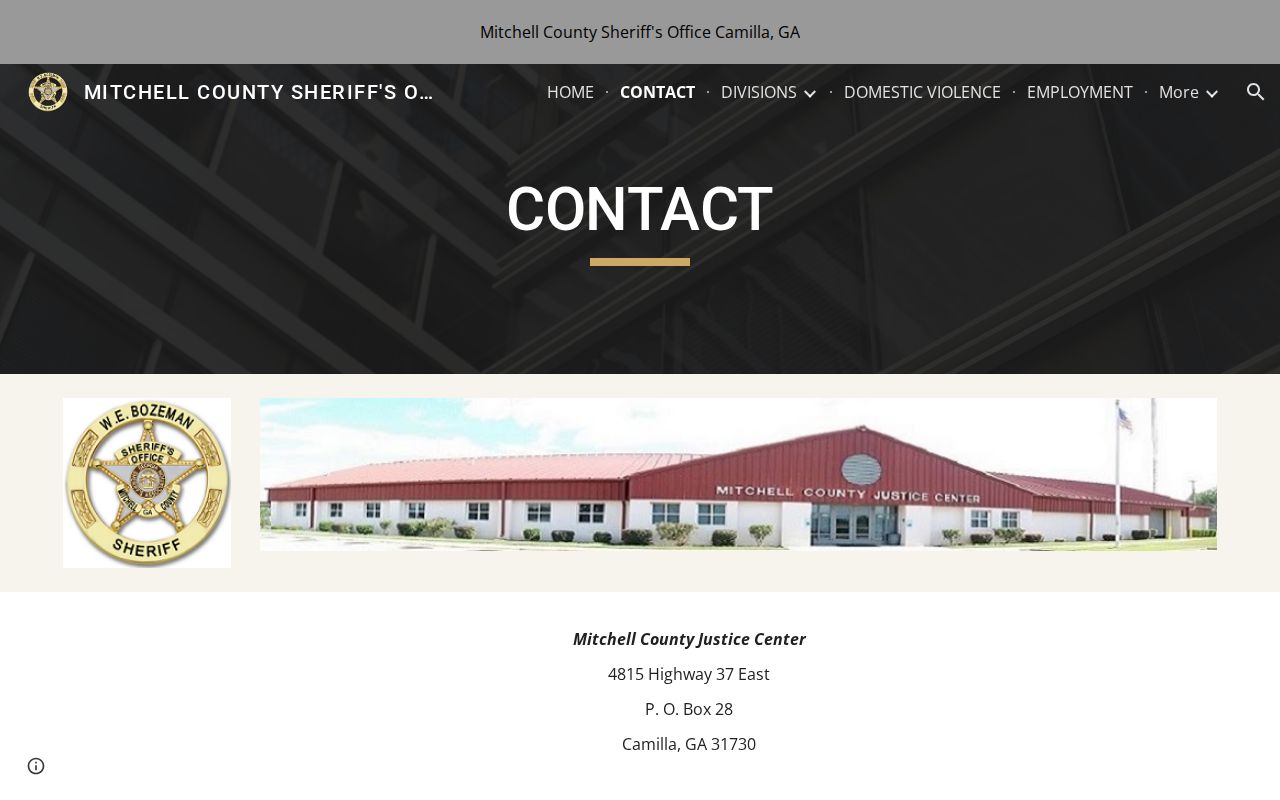
That contact page is a channel, not an online search. Ask what identification is needed, whether phone confirmation is available, and which Mitchell County office to visit.
Warrants in Mitchell County: The Main Types
The type of process sets the court and the next step in Mitchell County. An arrest warrant lets law enforcement take the named person into custody. A bench warrant usually follows a missed court date or a ignored court direction. Search warrants authorize a search and often involve confidential investigative material.
| Warrant type | How it arises | Likely issuer |
|---|---|---|
| Arrest warrant | Probable-cause finding after an application or law-enforcement request | Magistrate, State, or Superior judicial officer |
| Bench warrant | Missed court or other noncompliance | The court managing the case |
| Search warrant | Authorized search based on the legal standard | State or Magistrate Court within its authority |
| Traffic FTA process | Missed traffic response or date | State or municipal court |
Mitchell County offices do not publicly use the phrase capias pro fine. Follow the exact wording in the court's order, such as bench warrant or failure-to-appear warrant.
Mitchell County Magistrate Warrant Applications
Mitchell County Magistrate Court handles criminal warrant applications and the hearings that go with them. The county's own handout tells applicants to start with the law-enforcement agency that has jurisdiction, bring an incident report, give accurate dates and times, and provide a complete physical service address. A judge may grant the request, deny it, or set a hearing. The published $20 charge is an application fee, even if the judge denies issuance. Family and domestic-violence applications carry no charge. That amount is not a fee to clear an existing Mitchell County warrant. Once criminal process issues, a private complainant cannot simply withdraw it. The court controls the case from there.
Key distinction: A warrant application asks a judge to issue process; it is not an active warrant record or proof of guilt.
Mitchell County Warrant Records: What They Show
A court or sheriff file can hold more detail than a public case result in Mitchell County. Application materials may show the incident report, the alleged offense, the applicant's role, the sworn date, the judge's grant or denial, clerk processing, and the service address. An issued record can add an identifier, issue date, service status, bond or appearance terms, a court date, and any recall entry.
| Identifier | Connects the process to a case or application; no single public Mitchell format is documented. |
|---|---|
| Alleged offense | States the accusation or basis, not a conviction. |
| Issuing court | Controls appearances, motions, and recall. |
| Service status | May show active, served, returned, recalled, or closed. |
| Bond or appearance | Gives terms only if the court set and disclosed them. |
Use a result only to find the right office. Then confirm current warrant status with the Mitchell County issuing court or the sheriff.
Mitchell County Warrant Terms
Small wording changes can alter the next step in Mitchell County. Ask the issuing office how it uses each term in your specific record.
- Active or outstanding
- Issued and not yet served, recalled, or otherwise cleared in that system.
- Bench warrant
- Court process commonly tied to nonappearance or noncompliance.
- Recall
- A court action withdrawing the warrant.
- Quash
- A court order cancelling the warrant or process.
- Bond
- A financial or conditional promise that permits release while the case continues.
- Return or service
- The record of whether and how law enforcement executed the process.
Failure to appear, often shortened to FTA, means a missed required court appearance or response. In a traffic case, Mitchell County may also notify Georgia DDS. That license consequence is not itself a warrant search.
Mitchell County Warrants: Who Issues, Who Serves
Superior Court of the South Georgia Judicial Circuit handles felonies. Mitchell County State Court covers misdemeanors and traffic, while Magistrate Court manages warrant applications and preliminary criminal work. Camilla, Pelham, and Sale City each run documented municipal courts. Courts issue the process; the sheriff and other authorized officers serve it.
Mitchell County Sheriff’s Office
4815 Highway 37 East
Camilla, GA 31730
229-336-2030
Clerk of Superior and State Court
26 North Court Avenue
Camilla, GA 31730
229-336-2021
Ask which Mitchell County office holds the status field and which court controls the next appearance. One office may route the request elsewhere.
Mitchell County Warrant Contact Numbers
The current Mitchell County sheriff contact page lists 229-336-2030 for general, administration, jail, investigations, coroner, and Warrants/Civil contacts. An older county page separately lists Warrants/Civil at 229-336-2033. The two listings do not mean two active warrant lines. The older county sheriff page documents that second number and the office's warrant-service role.
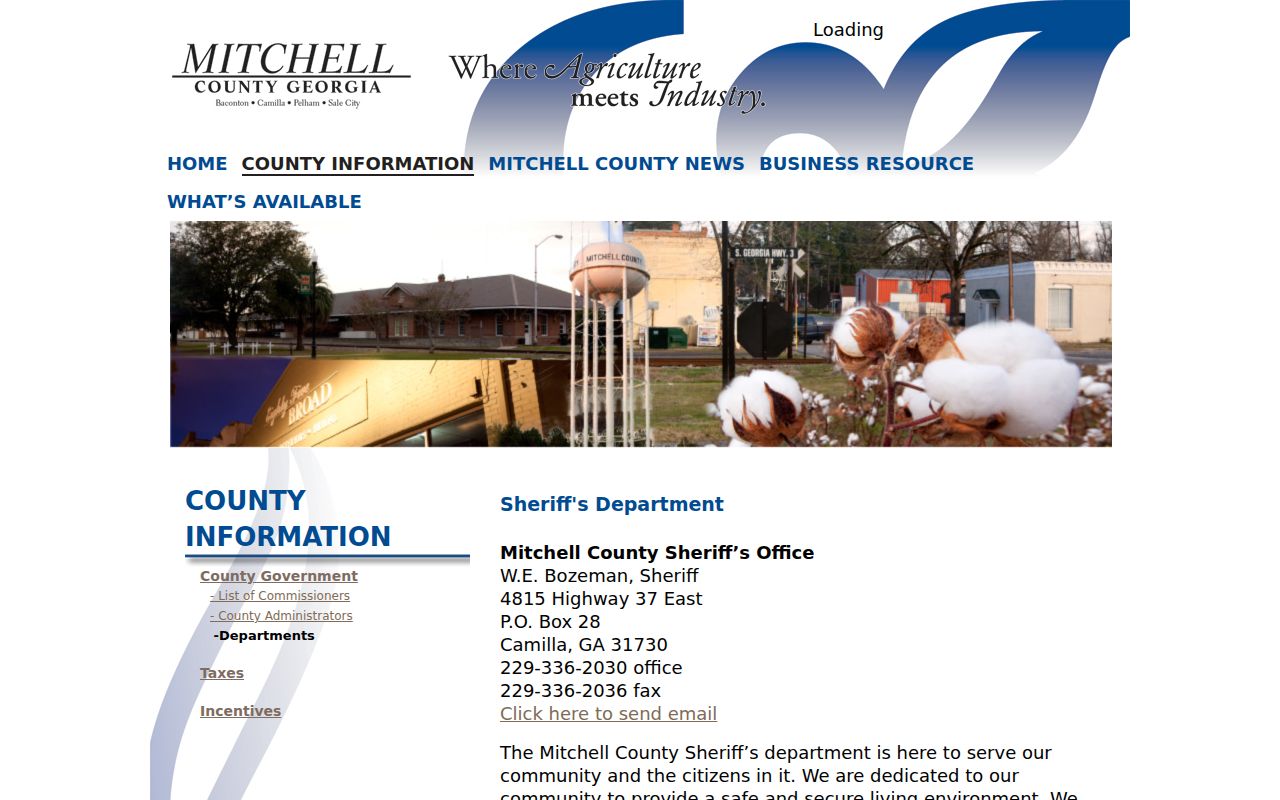
Treat 229-336-2030 as the controlling public number. Say the call concerns Warrants/Civil and ask Mitchell County staff to route it.
Handling a Mitchell County Warrant
Start with the court that issued the warrant. Confirm it is still active before you do anything else. Then ask which path fits your situation: voluntary surrender, bond, a first appearance, a traffic-court response, or an attorney-filed motion to recall or quash. Ask where to report, what ID to bring, and which payment forms are accepted. Counsel may even arrange the appearance for you. The Mitchell County sheriff posts no separate surrender desk, bond-window schedule, or list of accepted bond instruments. No same-day judge schedule appears either. The jail may be open around the clock, but that does not mean a judge or clerk can decide a warrant at all hours. Call first. For a bench warrant, contact the court that set the missed date; for a traffic matter, resolve the court case and separately verify any DDS status.
Important: Consult a lawyer before appearing; direct confirmation of an active warrant may result in immediate custody.
Mitchell County Traffic Warrants Need Two Checks
Georgia keeps no statewide traffic-citation database. Mitchell State Court lists a payment vendor and courthouse options. Camilla Municipal Court links to EZCourtPay. Both routes can settle a citation or fine, but neither is a countywide warrant database for Mitchell County. Verify the court printed on the ticket first. A failure to appear may be reported to Georgia DDS, which can start a license suspension process. Paying a DDS reinstatement charge does not clear the court case or warrant. Ask the court for a disposition and confirm any needed release was sent to DDS. Camilla takes online, mail, and in-person payments, but it warns that cash and personal or business checks are not accepted. For narrower steps, try the Mitchell County warrant check.
Warrant Record Access Under Georgia Law
The Georgia Open Records Act opens most agency records. A narrow Mitchell County request can seek an identified public disposition or warrant-application file. Some material stays protected. An agency may redact identifiers or withhold active-investigation, juvenile, sealed, or other protected records, and court files also answer to court rules and sealing orders.
Key rules: O.C.G.A. §§ 50-18-70 through 50-18-72 address public access, response timing, costs, and exemptions.
Uniform Superior Court Rule 21 covers court-record access and protected material.
Georgia’s juvenile-record opinion explains added limits on juvenile court and law-enforcement records.
The Attorney General's guide applies in Mitchell County. It describes a three-business-day response rule, reasonable search charges, $0.10-per-page copying, and the first 15 minutes of search time without charge.
Mitchell County Warrant Records Requests
Mitchell County offers no single online open-records portal. Send court-record questions to the Clerk and sheriff service or execution questions to the sheriff. A written request should name the agency, the date range, the record type, the case if known, and your preferred response method. Skip requests for a public roster of private people. Camilla publishes a one-page form. Sale City wants a written request to City Clerk Geraldine Bond at 122 E Broad Street, Sale City, 229-336-7885. Hand delivery, mail, email, fax, or another written form all work. These are request channels, not instant warrant checks. For Pelham and Baconton, start with the office most likely to hold the identified record.
Note: A case-access result or records response may locate a file without confirming that a warrant remains active today.
City Warrant Records in Mitchell County
Mitchell County counts four incorporated places in the 2020 Census. Camilla and Pelham both publish police and municipal-court contacts. Sale City posts police and court pages. Baconton's official site offers no police, court, warrant, or ticket pages, so City Hall is the place to route questions.
Camilla
Police and Municipal Court handle city traffic, summonses, and code cases.
Baconton
City Hall is the official fallback where no city warrant portal is published.
County arrest matters still go to the Mitchell Sheriff. For city cases, check status with the city court named on the citation or notice.
Mitchell County Warrant Jurisdiction Boundaries
A Mitchell County court search is not a federal case search. Don't confuse the two. Federal matters in the area go to the U.S. District Court for the Middle District of Georgia, Albany Division, and federal warrant service involves the U.S. Marshals Service. PACER can find federal case information. It is not a local active-warrant list, though, and it may require an account and fees. GBI and national fugitive pages do not replace the Mitchell Sheriff. The flow is simple. City court for a city matter, the issuing Mitchell County court for its file, the sheriff for county warrant service, and federal court only when the case is federal. Keep a private log of each call. Note the date, office, court, case identifier, and every instruction. Ask whether an answer is direct warrant confirmation or only a docket search. That distinction matters. Two Mitchell County records can seem to conflict. A court calendar may still show a case after a warrant was served. A payment screen may accept a citation. It may say nothing about whether a bench warrant was recalled. A clerk can explain the docket, while the sheriff can explain its current service procedure. Neither an old page nor a third-party result should override a fresh answer from the Mitchell County office that maintains the record. When staff point you elsewhere, note that route. Repeat the precise question there, and aim for a current status, the issuing court, and a clear lawful next step.